Ecooking | Peeling Mask
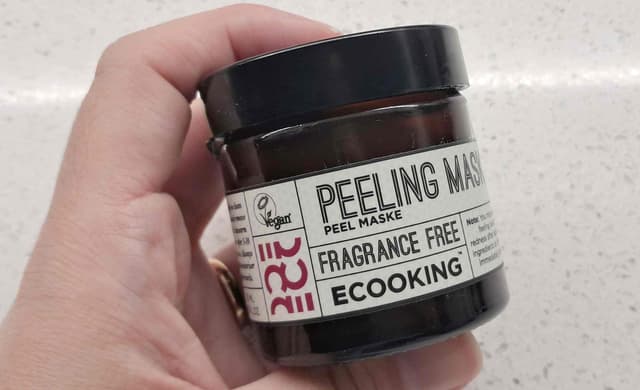
The Ecooking Peeling Mask is an old favorite that is definitely not for the faint of heart. In my constant quest to try new things, I end up forgetting about the products that have always served me well. Ecooking has been a favourite brand of mine since 2020, and I need to go back to giving it the attention it deserves. The formula is refreshingly straightforward. It is built around three exfoliating acids: lactic acid, glycolic acid and gluconolactone. Lactic acid is the main one, appearing second in the ingredient list, followed by glycolic acid and then gluconolactone, a PHA. Squalane adds some emollience, but there's not much else competing for attention. This is an exfoliating mask - that's its only purpose, and it does it well. It's meant to be left on for 5–10 minutes before rinsing with lukewarm water. I recently went for the full 10 minutes, and my face was noticeably red afterwards. The redness eventually settled with some extra care (a soothing serum and a ceramide moisturiser), but this is a strong peel, and I'd suggest starting with less product or keeping the first applications to no more than five minutes. The longer-lasting effects, fortunately, were a lot more positive. My skin felt like it had been bulldozed – in the best possible way. The texture was gone, leaving it so sleek that anything could practically slip right off. I don't know exactly how to describe it, but dolphin skin is what comes to mind. There was a noticeable glow, my skin felt less congested, and it looked clearer overall. One small packaging detail: it comes in an opaque jar. Normally, I'm not particularly fond of jar packaging, but I mind less in this case. It's a rinse-off mask, so you use a more generous amount per application than you would with a daily moisturiser, meaning the jar isn't being opened as often. I really like this one. It's a no-nonsense acid peel that delivers visible results, but its strength demands some caution. I still strongly recommend it.
Some By Mi | Retinol Bakuchiol Dual Cream
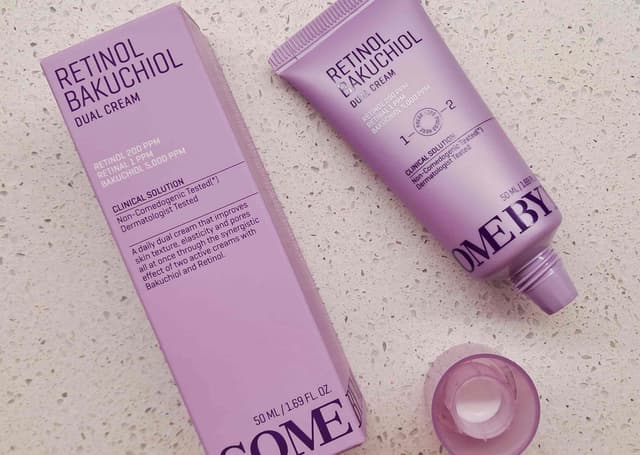
Some By Mi is a brand that consistently scores well in the classifier, which keeps me buying more of their products, but when it comes to marketing, sometimes they are a little too gimmicky for their own good. This cream comes in a dual-chamber tube, with two separate formulas dispensed together. When I was evaluating the Notino House of Korean Beauty advent calendar, I noticed the online retailer listed the ingredients for each cream separately (I presented the average score). However, the packaging itself only provides one combined ingredient list. On the one hand, I appreciate having the ingredients listed in their actual order of concentration in the finished product, since the two creams are dispensed together and can't be applied separately. On the other hand, that becomes a problem when the dispenser malfunctions. For a few days there, only the purple cream was coming out, while the beige one seemed to be clogged. I had no way of knowing exactly what I was applying from the packaging alone. And that's a shame, because there's plenty to like about these formulas. The beige cream contains retinol (200 ppm) and retinal (1 ppm), while the purple one contains bakuchiol (5,000 ppm). Both are supported by niacinamide, adenosine and a good selection of moisturising ingredients. The combined formula also includes cholesterol, ceramide NP, hydrogenated phosphatidylcholine, panthenol and squalane, alongside a peptide complex featuring copper tripeptide-1 and several palmitoyl peptides. It's a pretty impressive ingredient list. Hence the high score. But there's another catch. The packaging states that the advertised concentrations refer to the amount of each active in its respective cream, not in the finished product. So what does that actually mean for the concentrations I'm getting on my skin? If the two chambers dispense equal amounts, the final concentrations would be roughly half of those advertised: around 100 ppm retinol, 0.5 ppm retinal and 2,500 ppm bakuchiol. But I don't know if the two creams are being dispensed in equal proportions, so that is only an assumption. As for the actual experience, I do like the cream. It provides enough hydration for my night-time routine, and I appreciate having another retinol-based product to add to the mix. It hasn't caused any sensitivity or irritation, either. I generally enjoy products that combine moisturising ingredients with anti-wrinkle actives, and this one has a lot going for it on paper. Because of the packaging alone, it gets a good rather than a great for me. But despite my complaints, it hasn't put me off testing more of Some By Mi's products. They know how to formulate.
Alpha-H | Generation Glow Daily Resurfacing Essence
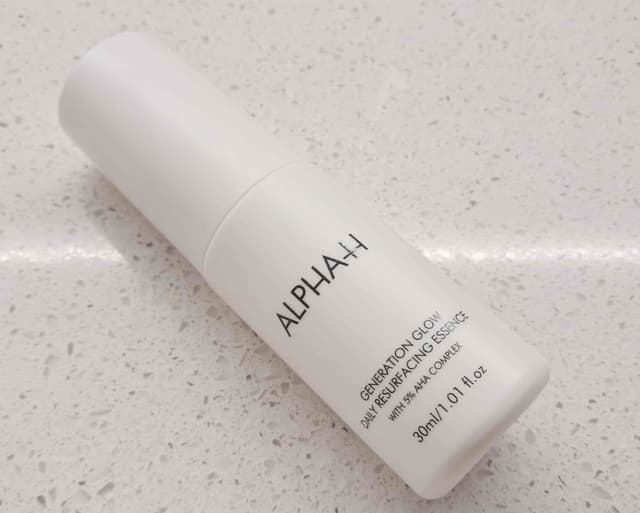
I had this product on my personal testing backlog, and I started noticing that most retailers had stopped restocking it. I think Alpha-H is planning on discontinuing it. I found an online retailer that still has it, so I finally got around to testing it to see whether stocking up was necessary. Generation Glow Daily Resurfacing Essence is a clear, thick liquid that's still fluid rather than gel-like. I apply it by adding a few drops to my palms and pressing them into the skin. Despite being an exfoliant, it is incredibly gentle: no tingling, no stinging, nothing. Even on areas where my skin was very sensitised, I had no adverse reaction whatsoever. The formula is built around a 5% AHA complex, combining lactic acid with fruit and sugar-derived extracts that are intended to provide gentle exfoliation. The formula also contains vitamin E and a rather extensive collection of botanical extracts, including green tea and chamomile, tea tree, eucalyptus, lavender and spearmint. However, performance wise, I didn't notice any positive difference in my skin. No improvement in texture, no noticeable refinement, no extra glow. And things actually took a turn for the worse. After introducing it into my routine, I started noticing sparse but painful red pimples, usually two or three at a time. I initially suspected hormones and continued using the product, thinking it might be unrelated. But I also began noticing more clogged pores and small bumps. My skin had been completely clear before, and it's not as though I was replacing a previous, stronger exfoliant with this one - l wasn't even using an exfoliant before. I can't say for certain whether this product was responsible, but the timing makes me suspicious of the formula. But even if it wasn't, at best, this did nothing. Ultimately, this was a miss for me, and it's not worth chasing it down. Maybe there is a reason they're discontinuing it. It felt lovely to apply and never stung, but I saw no improvement in my skin and actually experienced more congestion and breakouts. Gentle is good, but gentle without results isn't much of a selling point.
Biodance | Rejuvenating Caviar PDRN Real Deep Mask
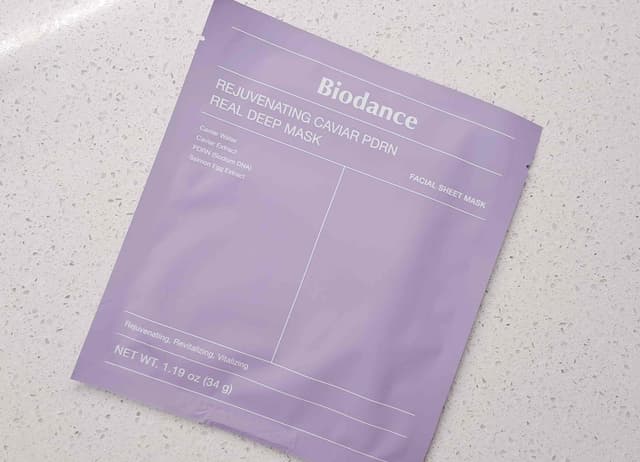
The first thing worth mentioning about this mask is its unusual recommended wearing time. It's a purple hydrogel mask, divided into two separate pieces: an upper section covering the forehead and cheeks, and a lower one for the mouth and jaw. You're supposed to leave it on for at least 3–4 hours. I tried it at night and kept mine on for 30 minutes. The skin around my upper cheekbones, which is my most sensitive area, started feeling a little stingy, so I wasn't particularly interested in pushing my luck. After removing it, though, the immediate results were nice. My skin looked noticeably plumper and glowier, and felt very hydrated. The glow wasn't particularly long-lasting, unfortunately. By the following morning, my skin was back to normal. The formula is built around a combination of humectants and emollients that provide hydration and help reduce moisture loss. Niacinamide is relatively high on the ingredient list, which is a nice addition, as is allantoin for its soothing properties. The extensive collection of gums and polysaccharides makes the formula particularly interesting: this isn't just a serum soaked into a conventional sheet mask; the gel itself is the delivery format, retaining water against the skin during application. Then there's the caviar and salmon story. The formula contains caviar extract, salmon egg extract and sodium DNA, the latter being particularly interesting given the current PDRN craze. I appreciate that the brand actually discloses the PDRN concentration, which is 60 ppb. That's an extremely small amount, so I wouldn't expect it to make a meaningful contribution to the mask's performance. It doesn't exactly inspire confidence in the idea that this is some kind of intensive regenerative treatment, but at least we know what we're dealing with. My biggest issue was actually the recommended wearing time. Three to four hours is a very long time to wear a sheet mask, and I honestly don't see how that's supposed to fit into anyone's routine. The mask feels heavy on the skin (as expected), makes it difficult to smile properly or eat, and I can't imagine wearing it comfortably while sleeping without transferring half of it onto my pillow and bedsheets. I also wouldn't be particularly keen on keeping something that caused stinging on my skin for several more hours. Since I only used it for 30 minutes, I might not have experienced the full intended benefits because I removed it considerably earlier than recommended. But that's precisely my point: if a sheet mask needs to be worn for three to four hours to deliver its promised results, I think the format and the intended use are rather misplaced. A skincare treatment shouldn't require that level of commitment to be practical. Still, not a bad option for instant hydration.
Nuxe | Very Rose 3-in-1 Soothing Micellar Water
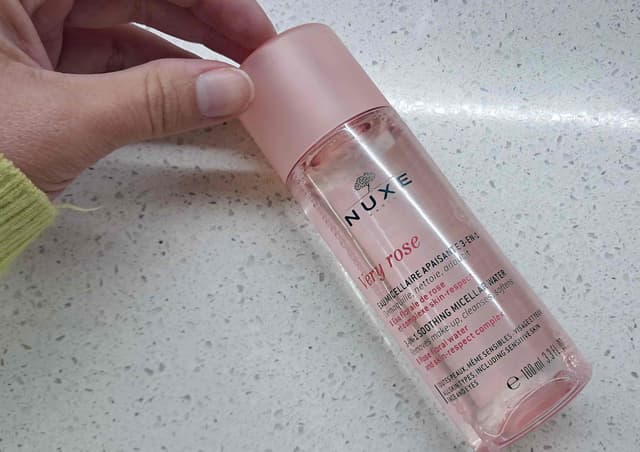
I'm very picky when it comes to micellar waters. I find most either remove makeup well but are too rough on the skin, or they respect the skin but pet the makeup instead of taking it off. The Nuxe Very Rose Micellar Water is in that "removes makeup well" category, which is honestly a bit concerning since it's marketed for sensitive skin. The cleansing base relies on PEG-6 caprylic/capric glycerides, a surfactant that helps dissolve makeup and impurities. Glycerin, listed so high up, provides some humectant action, but it's not enough for a formula that is supposed to be soothing. There's no substantial emollient system, and the product doesn't feel particularly moisturising. In fact, it doesn't glide smoothly over the skin. Bioderma's micellar water (my favorite) feels much more emollient, making makeup removal a more comfortable experience, especially around the eyes. But what really bothers me is the combination of Rosa damascena flower water and parfum. Rose water isn't automatically soothing just because it's botanical, and added fragrance seems like an unnecessary choice in a product intended for sensitive skin and eye makeup removal. The rest of the INCI is largely functional, covering solubilisation, pH adjustment and preservation, without anything particularly remarkable. Unfortunately, my experience reinforces these concerns. The product removes makeup effectively, including stubborn mascara, but just a few swipes left the skin around my eyes red. I wouldn't want to use it daily, and I can easily see it causing burning with repeated use. It's a shame because the cleansing performance is good. However, I'd rather use a micellar water that offers better slip and doesn't leave my eye area irritated - and most importantly, doesn't make the experience worse by having rose water and fragrance. For a product marketed for sensitive skin, this feels like an avoidable formulation misstep.
Arencia | Calendula Rice Mochi Cleanser
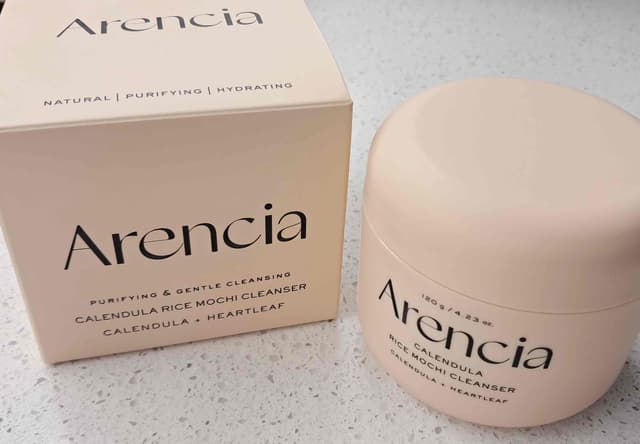
These Mochi Cleansers do, indeed, have an amazing texture. This is stretchy and gooey, a bit like melted marshmallow, and turns white as you spread it over the skin. You can feel the physical exfoliating particles, which remind me of small, soggy oats. They're not rough or abrasive, but I'm not convinced this kind of exfoliation is necessary in a cleanser marketed for dry and sensitive skin. The formula combines several cleansing surfactants with glycerin, which helps offset their drying potential. Almond seed meal and rice powder provide physical exfoliation, while calendula, houttuynia and prickly pear extracts add some soothing and skin-conditioning appeal. However, I'm not seeing a particularly compelling barrier-repair formula here, despite the marketing claims. When wet, the cleanser bubbles and foams quite a lot, and it takes several rinses to get everything off. It is not an unpleasant experience at all, but combined with the physical exfoliants, this leaves my skin feeling tight afterwards. That's not what I'm looking for in a cleanser for dry, sensitive skin, particularly one marketed as soothing. It does cleanse, but it doesn't compare to an oil or balm cleanser when it comes to removing stubborn makeup. So I'm left wondering what this product is actually trying to do: if it's meant to cleanse thoroughly, it falls short on makeup removal; if it's meant to be a gentle, skin-friendly cleanser, it leaves my skin feeling too tight. I can compromise on thoroughness as long as my skin doesn't feel stripped. But not otherwise. The texture is genuinely fun, but the performance doesn't live up to it. There are better options out there.
Some By Mi | Retinol Bakuchiol Bubble Toner
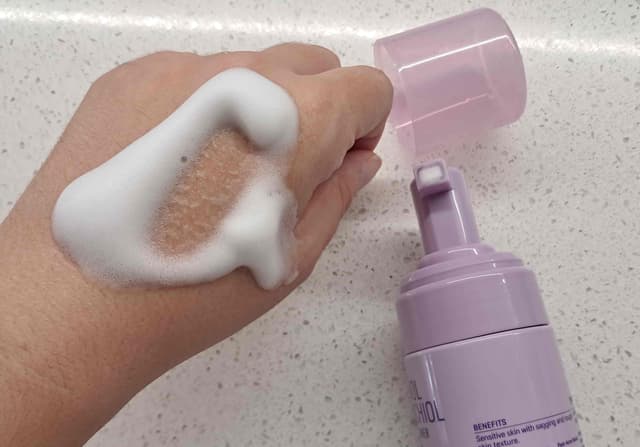
Bubble toners might have a gimmicky reputation, but after trying this one, I think this is one of the best formats for a toner or essence. With a traditional liquid toner, you either use a cotton pad (wasteful) or try to splash it onto your face with your hands (messy). This one comes straight out of the bottle onto the skin and spreads effortlessly. No mess, no fuss. It feels like I'm applying shaving foam to my forehead, and you can hear and feel the little bubbles popping, which is oddly satisfying. If you're into ASMR, you might particularly enjoy bubble toners. The formula is built around humectants, with glycerin, butylene glycol and propanediol helping to attract and retain water in the skin. There's also hyaluronic acid, trehalose and beta-glucan to contribute to hydration. Niacinamide is relatively high on the ingredient list, making it one of the more prominent actives here. It can support the skin barrier and help with uneven skin tone and texture, while allantoin and oat extract offer soothing benefits. Green tea extract adds antioxidant potential, although its presence alone doesn't tell us how much practical benefit to expect. Then there's the retinoid combination: retinol, retinal and bakuchiol. Having all three sounds impressive, but I couldn't establish the concentrations, and they are a bit far down on the list. I wouldn't consider this a substitute for a dedicated retinoid treatment, but I also don't think it's trying to be, since the marketing focuses more on texture and pores instead of anti-aging. The formula also contains fragrance and lavender extract - at the very bottom, though, and I couldn't detect any scent while using it, but still, it's worth noting if your skin is particularly reactive. My skin feels hydrated after applying this, and I like having that extra layer before a stronger active like retinal. I also appreciate that the formula includes retinoids, even if they're not the main event. It gives me some peace of mind about using it alongside a dedicated retinoid serum, without worrying that I'm introducing ingredients that might interfere with its absorption or unnecessarily compound irritation (unlike an exfoliating toner containing glycolic acid). The skinclassifier also gives this a high score, and I agree with the verdict: this is a great toner for targeting texture and pores while using it withing a retinoid routine (because an exfolianting acid would be too aggressive). It also delivers the hydration I need and the bubble format makes application genuinely enjoyable and practical. Overall, this is a product that is very well formulated for its purpose.
Cerave | Resurfacing Retinol Serum
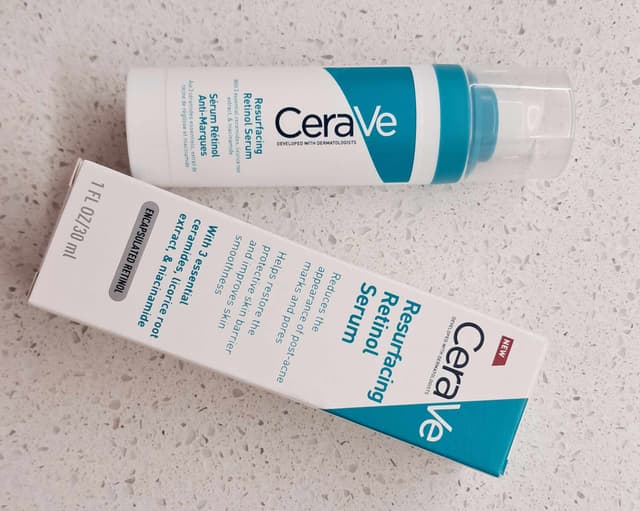
CeraVe's Resurfacing Retinol Serum is a gel-like serum that spreads easily and has a comfortable, soothing feel on the skin. It's not too thick, doesn't feel heavy, and is the kind of product that fits easily into a routine. At first glance, the formula looks good. Niacinamide is high up on the ingredient list, alongside dimethicone, dipotassium glycyrrhizate and the expected combination of three ceramides (NP, AP and EOP). There's also cholesterol, hydrogenated lecithin and phytosphingosine, which contribute to the barrier-supporting side of the formula - all things CeraVe is known for (and expected to deliver). However, even though retinol is the star of the marketing, the overall experience is much more that of a soothing, comforting barrier-repair serum - and nothing more. I didn't experience the degree of skin renewal that I associate with a retinol treatment. That doesn't mean the retinol isn't doing anything, but the results weren't noticeable, at least on my skin. The only iffy ingredient is alcohol, but I also don't think it's a major concern in this formula. It's relatively low on the ingredient list, and I experienced no irritation, no tingling, no sensitivity - it's most likely there as a solvent, to help dissolve or incorporate ingredients into the formula. For someone trying retinol for the first time, I think it could be a sensible option. The combination of retinol, niacinamide and barrier-supporting lipids makes it a good introduction, and I think anyone could start using it daily straight away. For someone already accustomed to retinol, however, I think expectations need to be different. I'd approach this as a barrier-supporting serum that happens to contain retinol, rather than a dedicated retinol treatment. The formula is good, and the experience is pleasant, but I found the results underwhelming compared with stronger, more targeted retinol products. That's why this gets a good rather than great rating from me. Not because it's a bad product — quite the opposite. I just find the marketing a little misleading about what the product actually delivers. If you're looking for a gentle introduction to retinol, it's worth considering. If you're looking for noticeable skin renewal, I'd look elsewhere.
Byoma | Barrier Repair Eye Cream
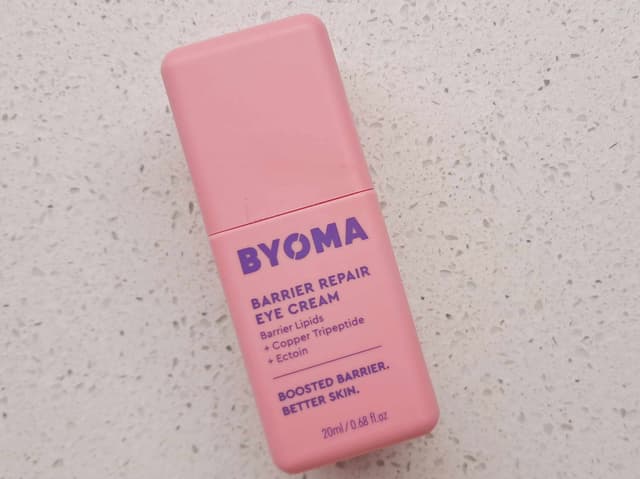
Technically this is an eye cream, but as with any eye cream, I use it just as a regular moisturiser for my whole face, because why wouldn't I? I chose it specifically because it looked hydrating without being overly occlusive. And the texture matched my expectations. It's moisturising without feeling heavy or greasy, with a combination of glycerin, several glycols and three forms of hyaluronic acid providing plenty of hydration. It also contains ceramide NP and sphingolipids, which fit nicely with Byoma's focus on barrier support. The two ingredients Byoma specifically highlights beyond its barrier-repair system are ectoin and copper tripeptide-1, and both are genuinely interesting additions. Ectoin is an extremolyte: a molecule produced by microorganisms to survive environmental stress. In skincare, it's used for its protective and hydrating properties, helping the skin cope with environmental stress while supporting its moisture balance. I particularly like the idea of it in a moisturiser that I'm using alongside active ingredients (I use this cream as my night moisturiser, after applying a retinol serum). Copper tripeptide-1 is the more explicitly anti-ageing ingredient. It's associated with skin repair and processes involved in collagen production. The science behind copper peptides is interesting, although the evidence for visible anti-ageing effects from topical cosmetic formulations isn't nearly as established as it is for retinoids. I've been using this alongside retinol (nighttime) and vitamin C (daytime), and I've had no sensitivity. I suspect the combination of the moisturising and barrier-supporting ingredients plays at least some role in that. I wouldn't say this product magically makes strong actives non-irritating, but my skin has been remarkably comfortable using all of them together. And that's really what I like about this. I wanted something moisturising and supportive enough to be used alongside an active-heavy routine, but not so occlusive that it feels like it's going to congest my skin. This hits that balance very well for me.
Paula's Choice | PRO Retinaldehyde Dual-Retinoid Treatment
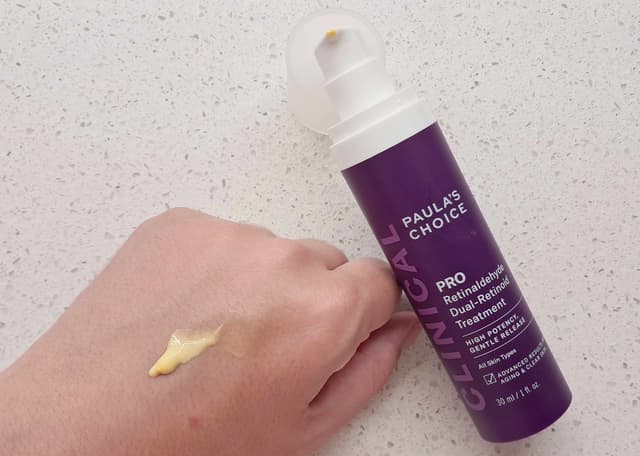
I went into this expecting a great retinoid serum, and indeed a great retinoid serum it is. What I wasn't expecting was how unbothered my skin was by it. The texture is a light cream rather than a traditional serum. It's not thick or greasy, but it's not cool and liquidy like a gel either. Just a standard light cream. It also has a strong yellow colour, which I happen to appreciate because it makes it much easier to see where you've applied it - and, more importantly, where you haven't. Despite knowing (and, after two weeks, seeing) that I was using a fairly strong retinoid on my skin, I had zero sensitivity with this. After two weeks I already had collected two compliments on how good my skin looks - plump, luminous, just overall good - and it kept getting better as I continued using it. There are no bad skin days with this. It just looks great. I started using it daily rather than gradually building up (I tend to do this to test the irritation potential of these strong actives serums), and didn't experience the redness, dryness or flaking that I was expecting. Obviously, tolerance to retinoids is highly individual, and I tend to tolerate them well, but usually when a serum has noticeable results this early, it's accompanied by a burning sensation on top of my cheekbones (my most sensitive area). Not this time - and that is something noteworthy. The formula contains retinal, alongside the more unusual oleyl adapalenate, an oil-soluble adapalene-derived retinoid. Early clinical data suggest it can improve fine lines and wrinkles, so this serum contains two genuinely interesting retinoid actives (hence the "dual") rather than just relying on retinal. There are also some nice supporting ingredients, including jojoba oil, squalane-like emollient ingredients, dimethicone and fatty alcohols, which give the formula its light cream texture and help make the whole thing feel more like a moisturising treatment than a stripped-back retinoid serum. There are also antioxidant ingredients, including tocopherol, pomegranate extract, naringin and Albatrellus confluens extract. What I like most about this is that I managed to see a difference in my skin quite fast, without having to go through an adjustment period to get there. Oleyl adapalenate is definitely an ingredient I'll be paying more attention to from now on. If you are not used to retinoid-specific serums, I still wouldn't recommend starting this one daily. The brand itself mentions starting with with 3 nights a week then building up frequency. But if you want to up your retinoid ante without such a big sensitivity risk, get this one.