Blue Light From Screens: Real Skin Damage or Myth?

Published on February 20, 2026
In this article
- What Is Blue Light?
- Experimentally documented effects of blue light on skin
- Blue Light Myths in Skincare Marketing
- So What Ingredients Are Being Used, and What Does the Evidence Say?
- The 3 things that actually matter about blue light and skin
- References
What Is Blue Light?
Blue light refers to a portion of the visible spectrum also known as high-energy visible (HEV) light, with wavelengths approximately 400–500 nm. It is abundant in sunlight but also emitted by digital devices (screens, LEDs) [1].
Experimentally documented effects of blue light on skin
Cellular oxidative stress and redox imbalance
Exposure to blue light (400–500 nm) has been consistently shown to increase reactive oxygen species (ROS) in human skin cells across in-vitro, ex-vivo, and in-vivo experimental models [2].
ROS are highly reactive molecules derived from oxygen that are naturally produced by our cells; under normal conditions, ROS play useful roles in cell signaling and the maintenance of many important physiological functions; however, when their production exceeds the skin’s antioxidant capacity, they can damage proteins, lipids, and DNA — a state known as oxidative stress [3,4]. Skin is already particularly vulnerable to oxidative stress because it is constantly exposed to environmental stressors such as light and pollution [3,4].
Unlike ultraviolet radiation, blue light does not interact directly with DNA [5]; instead, it is absorbed by light-sensitive molecules inside skin cells, known as chromophores (including flavins and porphyrins), which then trigger ROS formation [2]. This mechanism explains why blue light can induce biological stress without behaving like ultraviolet radiation [5].
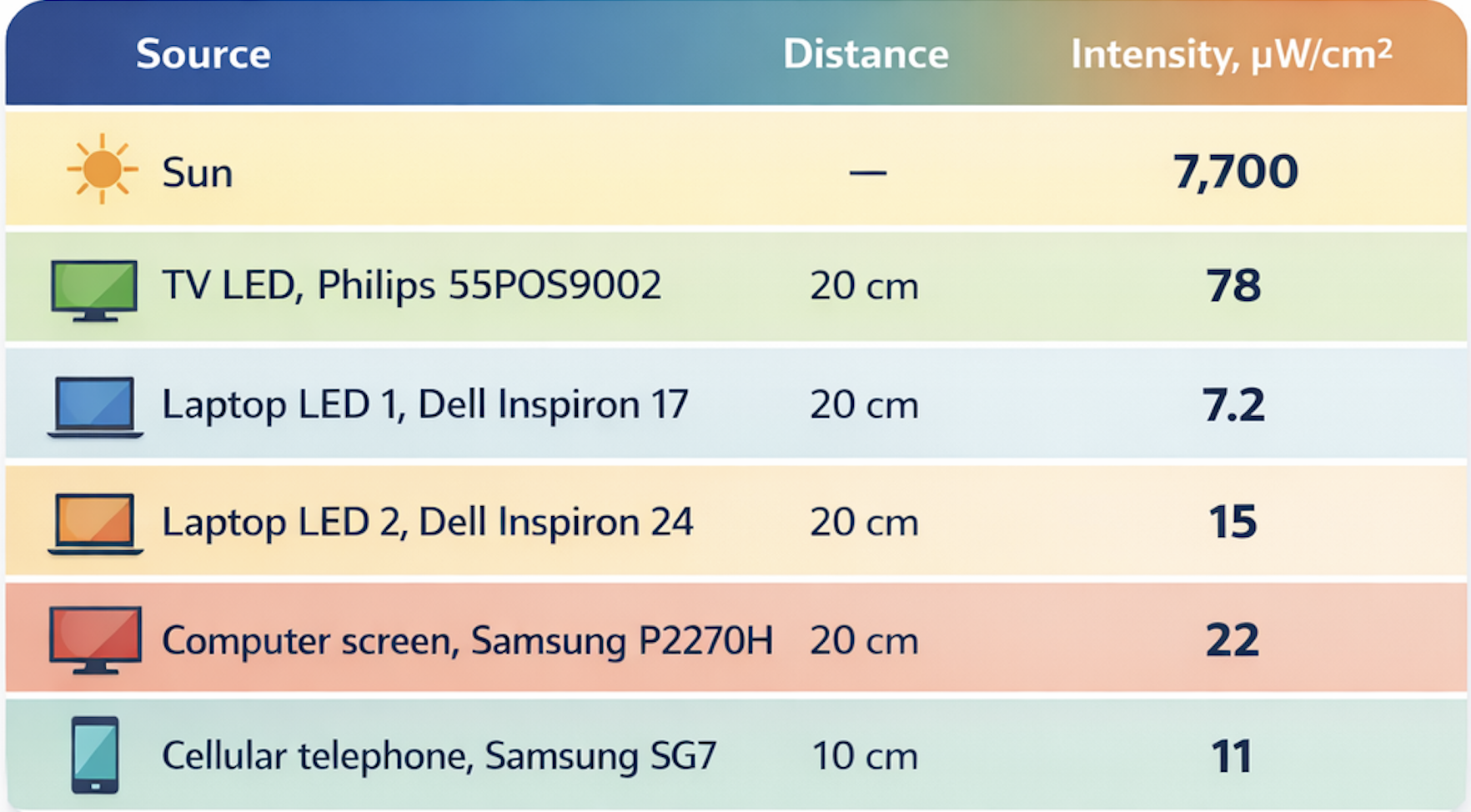
Experiments using light emitted from electronic devices (such as smartphones and computer screens) show that short-term exposure can increase ROS levels in human fibroblasts and keratinocytes under controlled laboratory conditions [6]. However, measurements of real-world light intensity demonstrate that sunlight delivers far higher biologically effective doses of blue light than electronic devices, making it the dominant source of blue-light-related oxidative stress in everyday life [7].
In summary, blue light can contribute to oxidative stress in skin by overloading normal cellular redox balance, but current evidence indicates that the magnitude of this effect depends strongly on dose and source, with solar exposure being far more impactful than screens under typical conditions.
Pigmentation and melanocyte activation
Pigmentation is one of the most consistently observed and biologically distinct effects of blue light on skin, particularly in individuals with darker skin phototypes [1,2].
Experimental and in-vivo studies show that exposure to visible blue light can stimulate melanin production, leading to immediate and sometimes persistent hyperpigmentation [1,2]. Compared to ultraviolet-induced tanning, blue-light-induced pigmentation has been shown to last longer, in some cases remaining visible weeks after exposure [1].
Pigmentation responses are wavelength- and dose-dependent, with shorter visible wavelengths producing the strongest effects [1,7]. Under real-world conditions, sunlight provides sufficient blue-light exposure to induce these changes, whereas emission from electronic devices is far weaker and unlikely to cause visible pigmentation on its own [7].
In summary, blue light can directly stimulate melanocytes and promote melanin production, making pigmentation one of the few blue-light effects with clear clinical relevance, especially under solar exposure.
Blue Light Myths in Skincare Marketing
Myth 1: Blue light from screens significantly damages skin
Reality:
While blue light can induce oxidative stress and pigmentation in experimental models, the doses required are far higher than those emitted by phones, tablets, or computer screens under normal use [1,2,7]. Quantitative exposure analyses consistently show that sunlight delivers orders of magnitude more blue light to the skin than electronic devices [1,2,7].
Myth 2: Blue light damages skin in the same way as UV radiation
Reality:
Unlike ultraviolet radiation, blue light does not directly damage DNA. Controlled studies in human dermal fibroblasts show no increase in DNA damage markers following blue light exposure, even when oxidative stress is present [5].
Any biological effects of blue light occur indirectly, mainly through cellular chromophores and oxidative signaling pathways, not through direct genotoxic mechanisms [1,5].
Myth 3: “Blue light protection” works like SPF
Reality:
Unlike SPF—which is regulated, standardized, and measured using validated testing protocols—claims of “HEV protection” or “blue-light blocking” are not regulated and have no universally accepted testing or labeling framework [2].
Effective blocking of blue light (which is visible) would require visible pigments, meaning most products marketed as blue-light protection cannot selectively filter blue light without visibly tinting the skin [2].
So What Ingredients Are Being Used, and What Does the Evidence Say?
Pigments (iron oxides)
Among ingredients marketed for blue-light protection, pigments—particularly iron oxides—are the only class with direct evidence of attenuating visible light. Optical studies using spectrophotometric measurements show that formulations containing iron oxides significantly reduce transmission of high-energy visible (HEV) light, including wavelengths in the blue-light range (≈400–490 nm), by absorption and scattering mechanisms [8]. This confirms that pigments can physically reduce the amount of visible light reaching the skin.
In addition to optical data, human in-vivo studies show that visible light induces pigmentation, with more pronounced and persistent effects in darker skin phototypes [1]. Clinical comparisons further demonstrate that iron-oxide–containing tinted formulations reduce visible-light-induced pigmentation more effectively than non-tinted sunscreens, supporting a functional link between visible-light attenuation and reduced pigmentary response [9].
Antioxidants
Antioxidants are frequently marketed as blue-light protective based on the observation that blue light can induce reactive oxygen species (ROS) in skin cells under experimental conditions [2,4]. Antioxidants can neutralise ROS once formed, consistent with their general role in oxidative stress mitigation [3,4]. However, this mechanism is not specific to blue light, does not prevent light exposure, and does not constitute photoprotection. Current evidence supports antioxidant use for general redox balance, not for selective or primary protection against blue-light exposure [2,3].
Botanical extracts and proprietary complexes
Botanical extracts and proprietary “digital stress” or “anti-pollution” complexes are commonly included in blue-light-marketed products, but supporting evidence is largely confined to in-vitro antioxidant effects [2,4]. These findings do not demonstrate attenuation of visible light or prevention of blue-light-induced effects in human skin. At present, no direct human in-vivo evidence supports the use of these ingredients as blue-light protective agents (as in preventive, instead of post-exposure mitigaton agents).
UV filters
Beyond individual brand claims, retailers—both online and in physical stores—frequently present sunscreens and SPF products as if they provide protection against all forms of light exposure, including blue light. UV filters such as titanium dioxide and zinc oxide are designed, tested, and regulated to protect against UVB and UVA radiation, not visible light. Optical measurements of finished formulations show that products containing UV filters alone provide minimal attenuation of blue and visible light, whereas substantial reduction in blue-light transmission occurs only when pigments such as iron oxides are added [8]. This demonstrates that UV filters, on their own, do not meaningfully attenuate blue or visible light and should not be equated with blue-light protection.
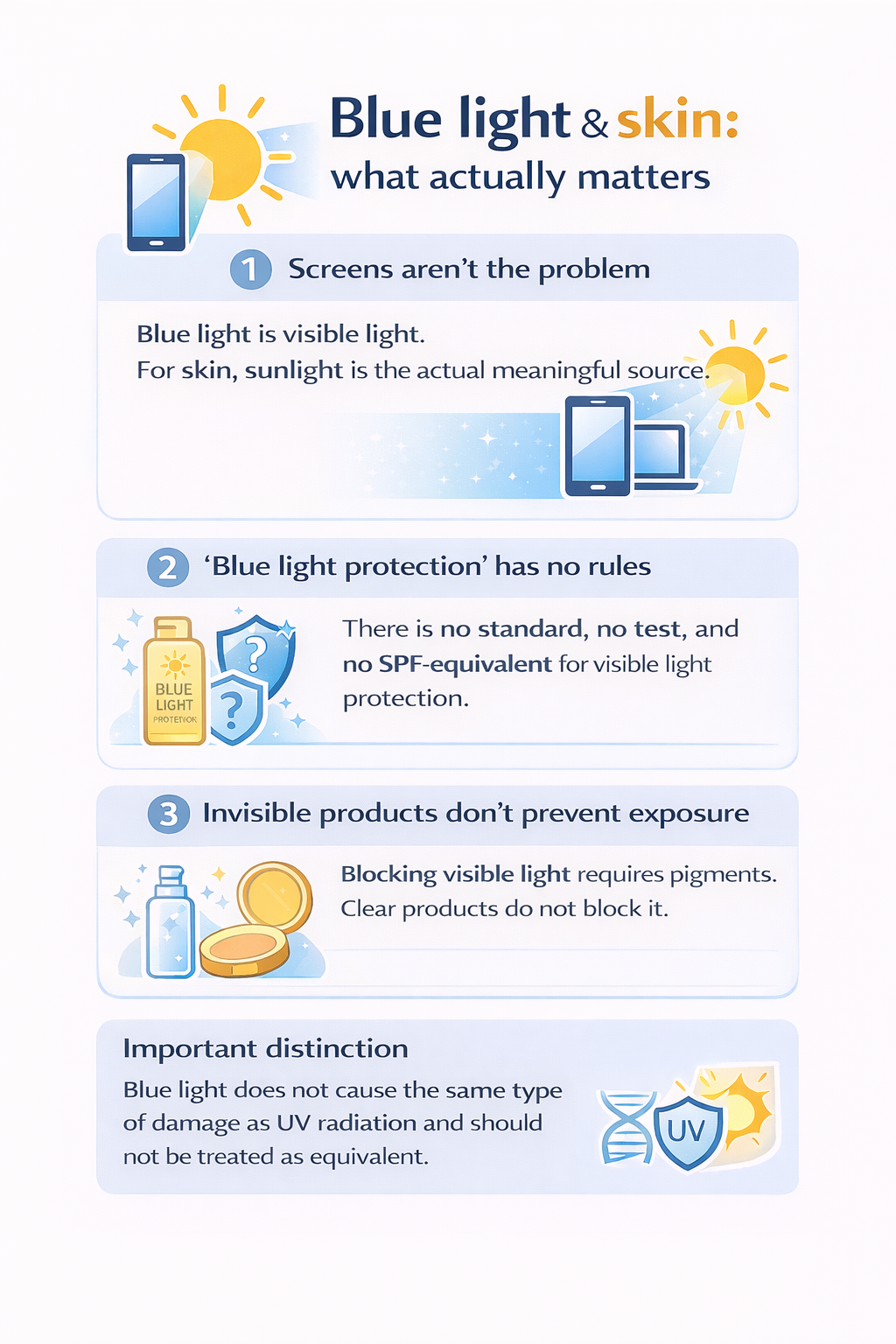
The 3 things that actually matter about blue light and skin
Pin it!
-
Your phone is not ruining your skin — the sun is
Blue light can affect skin under sufficient exposure, but in real life screens barely register compared with daylight. If blue light is contributing to skin stress or pigmentation, solar exposure is the source, not your laptop or phone. -
“Blue light protection” has no standard — and brands know it
There is no regulated definition, testing method, or performance threshold for protecting skin from visible or blue light. Unlike SPF, these claims are unregulated and non-comparable, leaving consumers with marketing language instead of measurable protection. -
If you can’t see it, it isn’t blocking anything
Preventing exposure to visible light requires pigments. Clear, invisible products do not block blue light and cannot act as preventive protection, regardless of how they are marketed.
In short, blue light is not the next UV, and skincare marketing has largely outpaced the science.
References
-
Austin, E., Geisler, A.N., Nguyen, J., et al. (2021). Visible light. Part I: Properties and cutaneous effects of visible light. Journal of the American Academy of Dermatology, 84(5), 1219–1231. https://pmc.ncbi.nlm.nih.gov/articles/PMC8887026/
-
Suitthimeathegorn, O., Yang, C., Ma, Y., et al. (2022). Direct and indirect effects of blue light exposure on skin: A review of published literature. Skin Pharmacology and Physiology, 35(6), 305–318. https://karger.com/spp/article/35/6/305/826941/Direct-and-Indirect-Effects-of-Blue-Light-Exposure
-
Birben, E., Sahiner, U.M., Sackesen, C., et al. (2012). Oxidative stress and antioxidant defense. World Allergy Organization Journal, 5(1), 9–19. https://pubmed.ncbi.nlm.nih.gov/23268465/
-
Jomova, K., Raptova, R., Alomar, S.Y., et al. (2023). Reactive oxygen species, toxicity, oxidative stress, and antioxidants: chronic diseases and aging. Archives of Toxicology, 97(10), 2499–2574. https://pmc.ncbi.nlm.nih.gov/articles/PMC10475008/
-
Kabakova, M., et al. (2025). Visible blue light does not induce DNA damage in human dermal fibroblasts. Journal of Biophotonics, 18(5), e202400510. https://pubmed.ncbi.nlm.nih.gov/40035238/
-
Arjmandi, N., Mortazavi, G., Zarei, S., et al. (2018). Can light emitted from smartphone screens and taking selfies cause premature aging and wrinkles? Journal of Biomedical Physics and Engineering, 8(4), 447–452. https://pmc.ncbi.nlm.nih.gov/articles/PMC6280109/
-
Gálvez, E.N., Aguilera, J., Solis, A., et al. (2022). The potential role of UV and blue light from the sun, artificial lighting, and electronic devices in melanogenesis and oxidative stress. Journal of Photochemistry and Photobiology B: Biology, 228, 112405. https://www.sciencedirect.com/science/article/pii/S1011134422000197
-
Bernstein, E.F., Sarkas, H.W., Boland, P. (2020). Iron oxides in novel skin care formulations attenuate blue light for enhanced protection against skin damage. Journal of Cosmetic Dermatology, 20(2), 532–537. https://pmc.ncbi.nlm.nih.gov/articles/PMC7894303/
-
Dumbuya, H., Grimes, P.E., Lynch, S., et al. (2020). Impact of iron-oxide containing formulations against visible light-induced skin pigmentation in skin of color individuals. Journal of Drugs in Dermatology, 19(7), 712–717. https://pubmed.ncbi.nlm.nih.gov/32726103/