Camphor
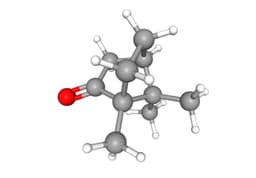
Summary: A fragrance ingredient with antimicrobial and soothing properties, but also toxic at high doses and now classified as a fragrance allergen in the EU.
Published on: 30/04/2025
Camphor is a naturally occurring monoterpenoid obtained from the wood of the camphor tree (Cinnamomum camphora) or synthesized from turpentine oil. It has a long history of medicinal use for its antimicrobial, analgesic, and anti-pruritic properties [1]. It is commonly used as a fragrance agent in cosmetics and personal care products [1].
Skin Benefits
Evidence suggests that camphor may offer the following potential benefits when used topically:
-
Antimicrobial activity: Camphor has demonstrated antibacterial and antifungal effects in vitro, including activity against pathogens relevant to skin infections [1,3].
-
Analgesic and anti-itch effects: Camphor can activate and then desensitize sensory receptors (e.g., TRPV1, TRPM8) thereby having an analgesic action [4,5].
-
Possible acne benefit: Due to its antimicrobial and anti-inflammatory effects, camphor shows theoretical promise for acne-prone skin, although clinical studies specifically evaluating camphor for acne treatment are limited [2].
-
Atopic dermatitis: Camphor may help manage atopic dermatitis by reducing inflammation, reinforcing the skin barrier, and limiting microbial overgrowth. While these properties are promising, more clinical data is needed to confirm its effectiveness in this context [2].
Safety and Toxicity
Despite its potential benefits, camphor poses significant risks. Camphor’s biological effects are highly dose-dependent.
Camphor is highly toxic if ingested and can cause seizures, respiratory distress, or even death at high doses [1].
In vitro studies on rat thymocytes have shown reduced cell viability and signs of oxidative stress at elevated camphor concentrations, highlighting potential cytotoxic effects even at the cellular level - that is, camphor may harm or kill cells when used at high enough doses in laboratory settings. [6].
In the United States, the FDA limits camphor concentrations in over-the-counter (OTC) products to a maximum of 11% [7].
Fragrance allergen status
In 2023, camphor was officially added to the European Union’s list of regulated fragrance allergens under Annex III of Regulation (EC) No 1223/2009 (as amended by Regulation (EU) 2023/1545). This list identifies substances that must be disclosed on cosmetic labels when present above 0.001% in leave-on products or 0.01% in rinse-off products. The inclusion of camphor reflects growing recognition of its potential to cause skin sensitization or allergic reactions in some individuals. While it continues to be used for its fragrance and antimicrobial properties, its classification as a fragrance allergen underscores its drawbacks and raises further questions about its suitability for sensitive skin or daily-use cosmetic products [8].
Conclusion
Camphor offers antimicrobial, analgesic, and anti-inflammatory activity, but these benefits are overshadowed by its safety concerns. It is toxic at high concentrations, can cause skin irritation, and is now officially recognized as a fragrance allergen in the European Union. While it remains in use, camphor is a controversial ingredient with limited relevance for modern skincare, particularly for sensitive skin. Future clinical studies may clarify its role, but at present, it is best regarded with caution.
References
-
Chen, W., Vermaak, I., & Viljoen, A. (2013). Camphor—A Fumigant during the Black Death and a Coveted Fragrant Wood in Ancient Egypt and Babylon—A Review. Molecules, 18(5), 5434–5454.
https://www.ncbi.nlm.nih.gov/pmc/articles/PMC6270224/ -
Duda-Madej, A., Viscardi, S., Grabarczyk, M., Topola, E., Kozłowska, J., Mączka, W., & Wińska, K. (2024). Is Camphor the Future in Supporting Therapy for Skin Infections? Pharmaceuticals, 17(6), 715.
https://www.ncbi.nlm.nih.gov/pmc/articles/PMC11206849/ -
Abdollahi, A., Fereydouni, N., Moradi, H., Karimivaselabadi, A., Zarenezhad, E., & Osanloo, M. (2024). Nanoformulated herbal compounds: Enhanced antibacterial efficacy of camphor and thymol-loaded nanogels. BMC Complementary Medicine and Therapies, 24, 44.
https://www.ncbi.nlm.nih.gov/pmc/articles/PMC10985855/ -
Xu, H., Blair, N. T., & Clapham, D. E. (2005). Camphor activates and strongly desensitizes the transient receptor potential vanilloid subtype 1 channel in a vanilloid-independent mechanism. The Journal of Neuroscience, 25(39), 8924–8937.
https://www.ncbi.nlm.nih.gov/pmc/articles/PMC6725586/ -
Fazmiya, M. J. A., et al. (2022). Current Insights on Bioactive Molecules, Antioxidant, Anti-Inflammatory, and Other Pharmacological Activities of Cinnamomum camphora Linn. Oxidative Medicine and Cellular Longevity, 2022, 9354555.
https://www.ncbi.nlm.nih.gov/pmc/articles/PMC9568346/ -
Cherneva, E., Pavlovic, V., Smelcerovic, A., & Yancheva, D. (2012). The effect of camphor and borneol on rat thymocyte viability and oxidative stress. Molecules, 17(9), 10258–10266.
https://www.ncbi.nlm.nih.gov/pmc/articles/PMC6268831/ -
U.S. Food and Drug Administration. (2024). Title 21—Food and Drugs, §310.545. Drug products containing certain active ingredients offered over-the-counter (OTC) for certain uses. Electronic Code of Federal Regulations (eCFR).
https://www.ecfr.gov/current/title-21/chapter-I/subchapter-D/part-310/section-310.545 -
European Commission. (2023). Commission Regulation (EU) 2023/1545 of 26 July 2023 amending Annex III to Regulation (EC) No 1223/2009 on cosmetic products.
Regulation - 2023/1545 - EN - EUR-Lex