Salicylic Acid
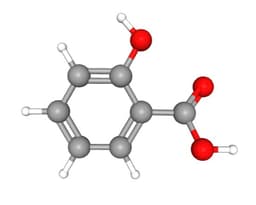
Summary: A pore-clearing exfoliant with and acne-fighting benefits.
Published on: 30/03/2025
Salicylic acid is a beta-hydroxy acid (BHA) used in dermatology to treat various skin conditions, most notably acne vulgaris.
Mechanism of Action
Salicylic acid works by loosening the bonds between skin cells in the outermost layer of the skin. This helps dead cells shed more easily and prevents them from building up and clogging pores — one of the main causes of acne [1].
Skincare Benefits
Efficacy in Acne Treatment
Multiple clinical studies support the use of salicylic acid for acne. A placebo-controlled trial using a 2% salicylic acid cleanser over 8 weeks reported statistically significant reductions in both inflammatory and non-inflammatory lesions [2]. Comparative trials have also shown its effectiveness is on par with other superficial chemical peels, including glycolic acid and Jessner’s solution [3].
Exfoliation and Skin Renewal
In addition to acne treatment, salicylic acid enhances epidermal turnover and smooths skin texture. It has been used to treat melasma, freckles and other forms of photodamage by accelerating cell renewal and removing superficial pigment [1, 4].
Anti-Inflammatory Properties
Salicylic acid exhibits anti-inflammatory activity, the concentration at which the anti-inflammatory action is most pronounced being between 0.5% and 5%. This makes it beneficial for inflamed acne lesions [1].
Safety and Considerations
Salicylic acid is generally well-tolerated at concentrations of 0.5% to 2% in over-the-counter skincare. Potential side effects include mild irritation, dryness, or skin peeling, especially in individuals with sensitive skin [1].
Although exfoliating agents like alpha-hydroxy acids are known to increase sensitivity to ultraviolet radiation, available evidence suggests that salicylic acid may not share this effect [5]. Nonetheless, the use of daily sun protection is still advisable during salicylic acid treatment.
Conclusion
Salicylic acid is a well-studied and effective topical agent for the treatment of acne and superficial skin disorders. Its ability to exfoliate within pores, reduce inflammation, and promote epidermal turnover makes it a valuable and evidence-based component in many dermatological and cosmetic formulations.
References
-
Arif, T. (2015). Salicylic acid as a peeling agent: a comprehensive review. Clinical, Cosmetic and Investigational Dermatology, 8, 455–461.
https://www.ncbi.nlm.nih.gov/pmc/articles/PMC4554394/ -
Woodruff, J., & Appa, Y. (2013). A double-blind, placebo-controlled evaluation of a 2% salicylic acid cleanser for improvement of acne vulgaris. Journal of the American Academy of Dermatology, 68(4), AB12.
https://www.jaad.org/article/S0190-9622(12)01331-X/fulltext] -
Bae, B. G., et al. (2013). Salicylic acid peels versus Jessner's solution for acne vulgaris: a comparative study. Dermatologic Surgery, 39(2), 248–253.
https://pubmed.ncbi.nlm.nih.gov/23121256/ -
Kligman, D. E., & Kligman, A. M. (1998). Salicylic acid peels for the treatment of photoaging. Dermatologic Surgery, 24(3), 325–328.
https://pubmed.ncbi.nlm.nih.gov/9537006/ -
Kornhauser, A., Wei, R. R., Yamaguchi, Y., Coelho, S. G., Kaidbey, K., Barton, C., Takahashi, K., Beer, J. Z., Miller, S. A., & Hearing, V. J. (2009). The effects of topically applied glycolic acid and salicylic acid on ultraviolet radiation-induced erythema, DNA damage and sunburn cell formation in human skin. Journal of Dermatological Science, 55(1), 10–17.
https://pubmed.ncbi.nlm.nih.gov/19411163