Glycolic Acid
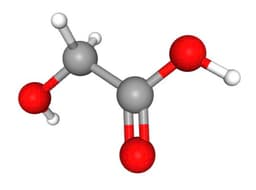
Summary: An effective exfoliant that enhances skin texture, diminishes hyperpigmentation, and reduces signs of aging.
Published on: 12/04/2025
Glycolic acid is the smallest alpha-hydroxy acid (AHA) and is used in dermatology for its exfoliating properties and its ability to improve skin texture and tone. Its small molecular size allows it to penetrate the skin more effectively than other AHAs [1,2].
Mechanism of Action
Glycolic acid reduces the cohesion between corneocytes in the outermost layer of the skin, promoting exfoliation and accelerating cell turnover [1]. This action results in smoother skin and improved radiance.
Benefits
-
Acne Treatment: Glycolic acid helps clear comedones and reduces inflammatory acne lesions through its exfoliating effect [2].
-
Hyperpigmentation Reduction: It facilitates the removal of pigmented keratinocytes, aiding in the treatment of melasma, post-inflammatory hyperpigmentation, and uneven skin tone [2].
-
Anti-Aging Effects: Glycolic acid stimulates collagen production and improves skin elasticity, which can reduce the appearance of fine lines and wrinkles [3].
Safety and Considerations
Glycolic acid is generally well-tolerated at concentrations up to 10% in over-the-counter skincare products. Side effects may include mild irritation, stinging, and erythema, especially in sensitive skin. It increases the skin’s sensitivity to ultraviolet radiation, so daily sun protection is recommended during use [4, 5].
References
-
Fartasch, M., Teal, J., & Menon, G. K. (1997). Mode of action of glycolic acid on human stratum corneum: ultrastructural and functional evaluation of the epidermal barrier. Archives of Dermatological Research, 289(7), 404–409.
https://pubmed.ncbi.nlm.nih.gov/9248619/ -
Sharad, J. (2013). Glycolic acid peel therapy – a current review. Clinical, Cosmetic and Investigational Dermatology, 6, 281–288.
https://www.ncbi.nlm.nih.gov/pmc/articles/PMC3875240/ -
Ditre, C. M., Griffin, T.D., Murphy, G. F., Sueki, H., Telegan, B., Johnson, W. C., Yu, R. J., & Van Scott, E. J. (1996). Effects of alpha-hydroxy acids on photoaged skin: a pilot clinical, histologic, and ultrastructural study. Journal of the American Academy of Dermatology, 34(2 Pt 1), 187–195.
https://pubmed.ncbi.nlm.nih.gov/8642081 -
Andersen, F. A. (1998). Final report on the safety assessment of glycolic acid, ammonium, calcium, potassium, and sodium glycolates, methyl, ethyl, propyl, and butyl glycolates. International Journal of Toxicology, 17(1_suppl), 1–241.
https://journals.sagepub.com/doi/abs/10.1177/109158189801700101 -
Kornhauser, A., Wei, R. R., Yamaguchi, Y., Coelho, S. G., Kaidbey, K., Barton, C., Takahashi, K., Beer, J. Z., Miller, S. A., & Hearing, V. J. (2009). The effects of topically applied glycolic acid and salicylic acid on ultraviolet radiation-induced erythema, DNA damage, and sunburn cell formation in human skin. Journal of Dermatological Science, 55(1), 10–17.
https://pubmed.ncbi.nlm.nih.gov/19411163/